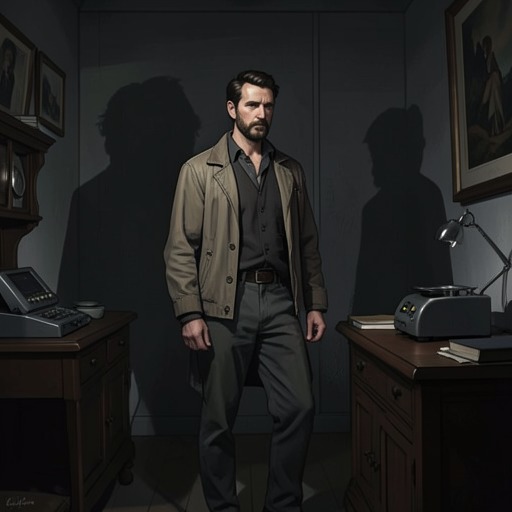
Nigel Bollingsworth
Theodosia and the Serpents of ChaosNigel Bollingsworth is a museum insider whose courteous, helpful manner conceals his allegiance to the Serpents of Chaos. His betrayal is sharpened by the contrast between his early interventions on Theodosia’s behalf and his later effort to overpower and recruit her: the man who once returned her papyrus becomes an accomplice in the plot she is trying to stop.
Identity and Public Role
Nigel is established through his place in the museum and his easy familiarity with its people. When Henrietta Throckmorton returns after discovering Amenemhab’s adjoining tomb, he greets her warmly and asks whether she has brought treasure. His relaxed eagerness fits the museum’s excitement over the discovery, while the greeting positions him as someone accustomed to sharing in its daily work and news.
His attention can also seem considerate. When Theodosia looks pale as Henrietta unwraps a carved plaque depicting executions, Nigel comes to stand beside her and asks whether she is all right or needs to lie down. The concern is specific to the moment: he notices her expression while the adults are focused on the newly uncovered object. At this stage, his alertness reads as kindness rather than surveillance, making the later revelation a reversal of what his attentiveness means.
The Helpful Colleague
An earlier encounter gives Nigel a more active role as Theodosia’s defender. Clive Fagenbush takes a papyrus from her, and Nigel enters the room to challenge him and demand that he return it. Fagenbush mutters that he thought Theodosia had something that did not belong to her; Nigel nevertheless helps restore the papyrus to her hands. After Fagenbush leaves, Nigel checks whether she is all right, and Theodosia thanks him. His manner remains reassuring: he accepts her response, beams, and tells her to carry on before leaving himself.
The scene establishes a relationship built on apparent trust, but not on extensive intimacy. Theodosia is grateful for his intervention, and Nigel is willing to step between her and a brusque colleague. Later, when Theodosia returns to the museum and goes to Receiving to look for Fagenbush, Nigel and Edgar Stilton stop their work to watch her. Nigel asks whether something is wrong after an awkward pause. The exchange briefly places him once more in the role of an observant, socially attentive colleague, even as Theodosia’s search for Fagenbush is part of a suspicion that will prove misplaced.
The Betrayal in Amenemhab’s Tomb
The decisive reversal comes in Amenemhab’s tomb, where Theodosia faces three pursuers. When they turn to watch her, she recognizes Von Braggenschnott and Tetley, then realizes that the third is Nigel. Her shock follows from the mistaken belief that Fagenbush was the traitor; she feels relief that the suspected betrayal is not her mother’s, but the relief is immediately overturned by Nigel’s appearance.
Nigel explains that Fagenbush was not the traitor. He had encouraged Alistair Throckmorton to hire him because Fagenbush looked so suspicious that, if trouble arose, attention would fall on him. The earlier episodes therefore acquire a second meaning: Fagenbush’s conspicuous suspicion served as cover, while Nigel’s credible helpfulness helped keep the real conspirator from view. The deception was deliberate, not an accidental benefit of Fagenbush’s manner.
Nigel also corrects Theodosia’s assumption that he is working for the Germans. He says his allegiance is to the Serpents of Chaos. That distinction makes him more than a local accomplice in the tomb-raiding operation: he identifies himself with the organization behind the wider threat. His betrayal is thus both personal, because Theodosia had accepted his help, and strategic, because he has used his position and knowledge of the museum to misdirect suspicion.
Coercion and Narrative Significance
The confrontation moves from revelation to physical control. While Von Braggenschnott argues that Theodosia’s power makes her a threat to her parents, she hears movement and reaches into her pocket to close her hand around dust. Nigel then charges into her, knocking both of them against a wall and narrowly missing a burning torch. He grabs her from behind and pins her arms beneath his, holding her so tightly that she struggles to breathe.
Even as he restrains her, Nigel tries to make the betrayal sound like an offer. He tells Theodosia that her parents do not appreciate her as the Serpents would, and invites her to imagine what they could achieve together and the power they could wield. His whispered promise that they would answer to no one turns his earlier attentiveness into a distorted form of recruitment: he has noticed her abilities, but seeks to turn that recognition into leverage. Theodosia refuses the appeal, calling him as mad as Von Braggenschnott.
Nigel’s character arc depends on that collision between surface and allegiance. The papyrus episode and his concern over Theodosia’s pallor establish a plausible mask of ordinary kindness; the tomb scene reveals how effectively the same social credibility can operate as camouflage. His plan makes the openly suspicious Fagenbush a diversion, while his own composed manner lets him move close to the people he ultimately betrays. At the point reached in the confrontation, however, persuasion has given way to force: Nigel has exposed himself, seized Theodosia, and tried to recruit her while she is physically trapped.